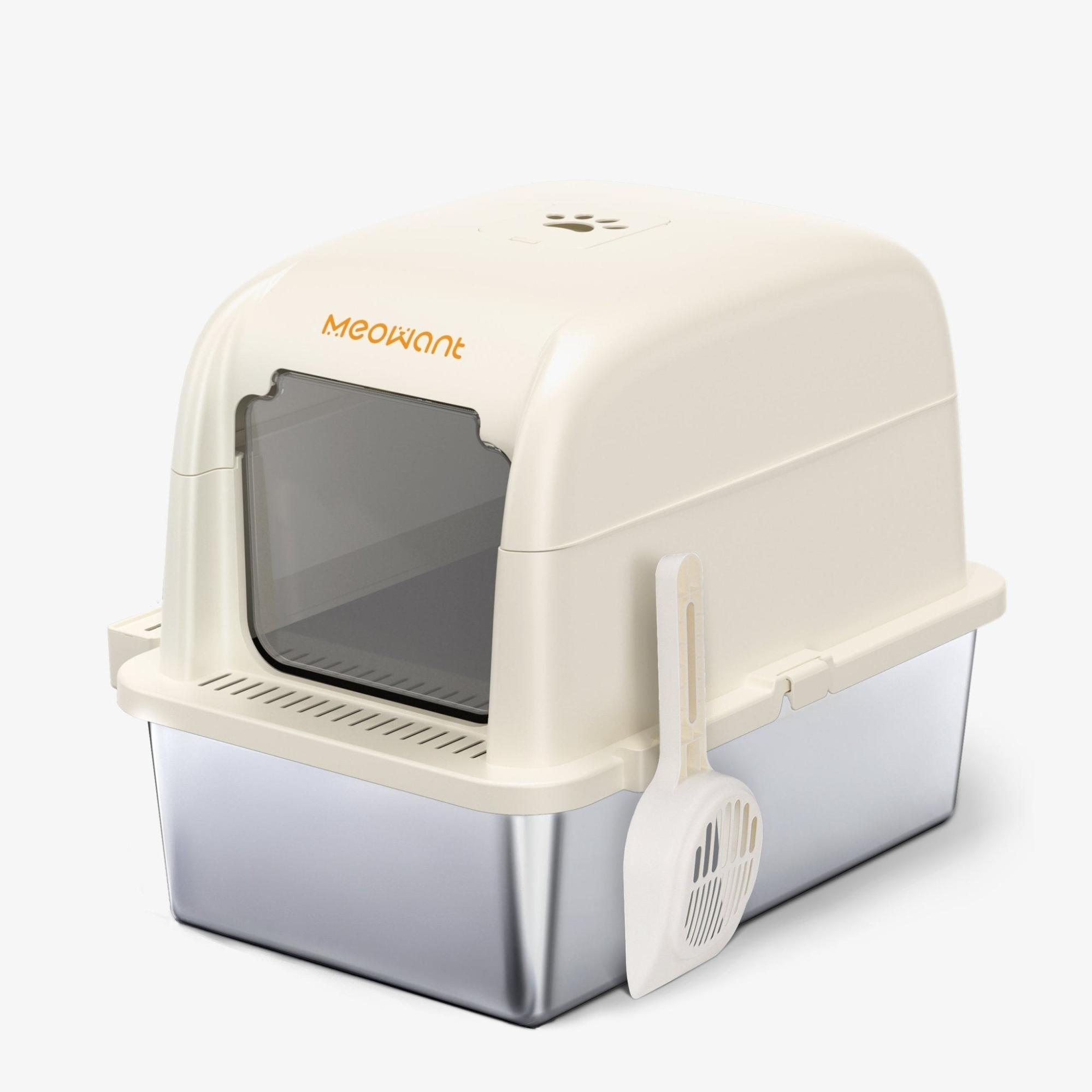
Stainless Steel Cat Litter Box vs. Plastic: What Holds Up
Most cat owners replace a litter box when it cracks, and most litter boxes crack because they are made of plastic. That seems like a minor inconvenience until you realize the same material that fails physically also fails hygienically long before it breaks. Scratches from claws and scoops create microscopic grooves that hold odor, bacteria, and ammonia residue no matter how thoroughly you scrub. The box looks clean and still smells, and the cat starts avoiding it.
The comparison between plastic and metal is not really a debate about appearance. It is a question of how a material behaves after months of daily scratching, washing, and contact with urine. Stainless steel has been standard in veterinary clinics and catteries for exactly this reason, and it is now common in homes. This article compares the two materials honestly, looks at the design details that matter more than the material itself, and explains how to switch over without disrupting your cat’s routine.
Why Plastic Boxes Degrade Faster Than Owners Expect
A new plastic litter box feels solid enough, and for the first few months it usually is. The problems begin at a scale you cannot see. Every scoop drags grit across the base. Every cat pushes off with its claws when covering. Both actions leave shallow scratches that look harmless but behave like a sponge.
The scratch problem
Once plastic is scored, urine seeps into the grooves and stays there after the surface is wiped. Ammonia binds to those scratches, which is why a plastic box can smell strongly even immediately after a full wash. Odor-neutralizing sprays only mask the residue temporarily because the source sits below the surface the spray can reach. Over time the base also flexes, and the seams where the walls meet the floor begin to separate, creating a gap that traps litter and moisture.
What your cat actually notices
Cats have roughly fourteen times the olfactory receptors of humans, so the odor that seems faint to you is likely overwhelming to them. A box that smells of old ammonia is a box many cats will use reluctantly, and reluctant use is how accidents outside the box begin. Some cats also react to the texture of scratched plastic under their paws, especially when the surface has become rough or uneven.
What Makes Stainless Steel Different
Switching to a stainless steel cat litter box removes the scratch-and-absorb cycle entirely. Metal does not score the way plastic does, and urine cannot penetrate a non-porous surface. Washing it means washing the surface, not the material beneath it, so there is no hidden reservoir of odor waiting to resurface.
Hygiene that survives daily use
A smooth steel base wipes down cleanly, and the box returns to its original state after each wash rather than degrading slightly. Stainless steel is also resistant to the acidic and alkaline compounds in cat urine, so it does not stain, discolor, or develop the chalky residue that accumulates on worn plastic. That makes a meaningful difference over a year of daily scooping, because the box you clean in month twelve is functionally the same box you bought.
Weight, stability, and the long view
Steel is heavier than plastic, which is a genuine advantage for a large cat that likes to dig hard. The box stays planted instead of sliding across the floor, and the rim does not flex when a cat leans on it. The same durability means the purchase cost is amortized over years instead of replaced every season. For households that have gone through several plastic boxes, a single well-built metal unit often costs less in total.
Design Details That Matter More Than Material
Material solves the hygiene problem, but daily satisfaction depends on shape, size, and entry design. A well-made box with the wrong proportions will still frustrate both cat and owner.
Size and entry height
The box should be roughly one and a half times the length of your cat, nose to base of tail, so there is room to turn and dig. A high-sided box contains kicks and urine spray, but a high entry becomes an obstacle for a senior cat or a kitten. Look for a low front lip paired with raised sides, a configuration that gives privacy and containment without forcing a jump. For arthritic cats, a shallow entrance with a ramp is worth more than any other feature.
Scoops, liners, and corners
Rounded interior corners make scooping faster because there is no square edge where clumps stick. Avoid liners with a stainless base — urine wicks between the liner and the metal, and the whole point of the material is defeated. A metal scoop is a small upgrade that resists the same degradation as the box itself. Check that the box has enough depth at the base for the litter to sit several inches deep, since shallow litter encourages digging to the bottom and scratching against the metal.
Making the Switch Without Waking the House
Cats are territorial about elimination habits, so a sudden replacement can cause a refusal. Set the new box beside the old one and let both run for a week, keeping the old box clean during the transition. Most cats investigate the new box within a few days, and once the old box is being used rarely, remove it. Never remove the old box first and leave only an unfamiliar one, especially in a multi-cat home.
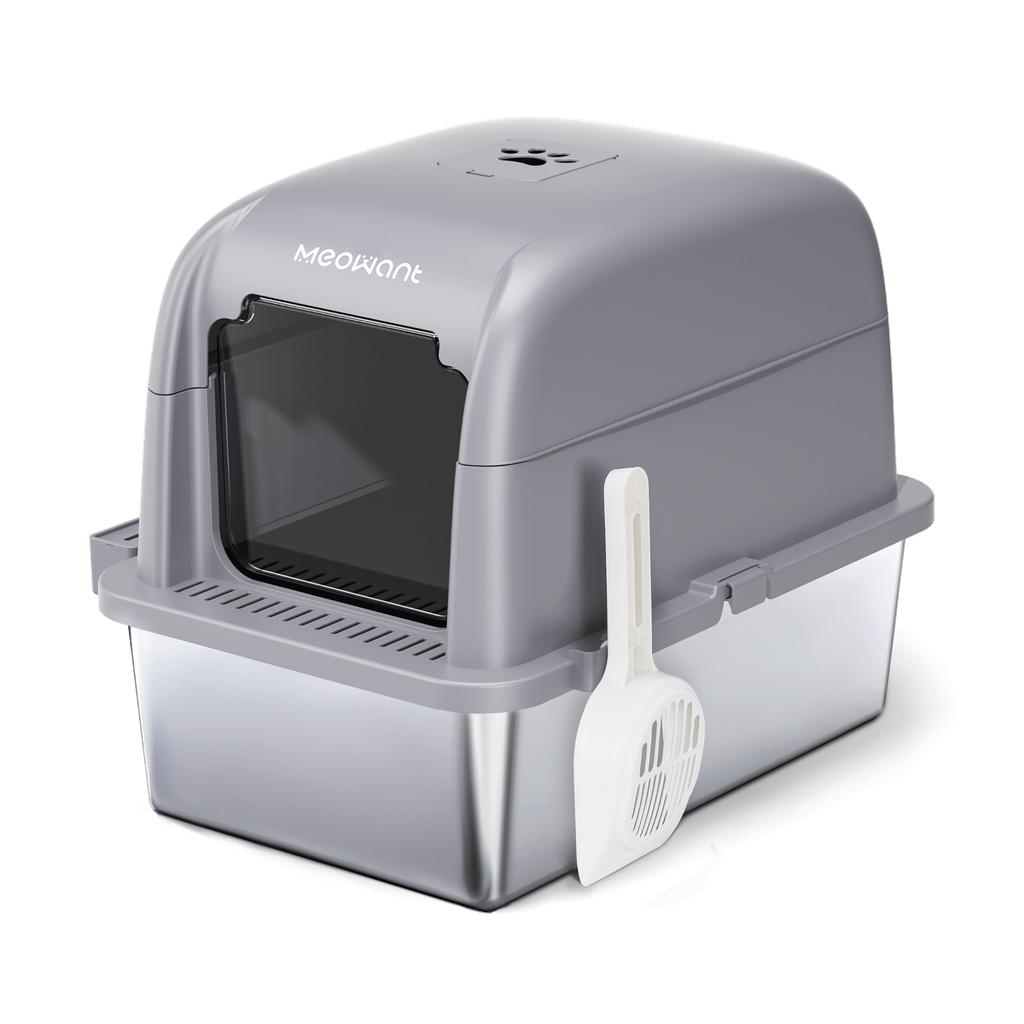
Keep the litter type consistent. Changing both the box and the substrate at the same time makes it hard to know which change a hesitant cat is reacting to. Place the new box in the same spot or immediately adjacent, away from food and loud appliances, and scoop daily as you did before. A box that smells unfamiliar and has been moved across the house is a much harder sell than a clean metal box in the usual corner. Meowant’s stainless designs pair a heavy-gauge base with a comfortable entry height, which is the kind of combination that lets a cat settle in without a transition period turning into a standoff.
Cost, Care, and the Practical Trade-Offs
Stainless steel costs more up front than a basic plastic pan, and that is the honest downside. Plastic also offers colors, hoods, and disposable convenience that metal does not. If your cat is a gentle digger and you replace boxes routinely, the gap narrows. If your household has multiple cats, a vigorous digger, or a recurring odor problem, metal pays for itself quickly in fewer replacements and less litter wasted on boxes that need to be dumped and refilled early.
There is also a practical difference in how the two materials respond to temperature and ambient moisture. Plastic in a humid bathroom or laundry room can develop a persistent damp smell that clings to the walls, while steel stays neutral and dries quickly after a wash. Anyone who has ever scrubbed a plastic box and still caught a whiff of ammonia an hour later will recognize the difference immediately, and it is one of the main reasons catteries and clinics moved to metal long before it became a home trend.
Care is simple but not zero. Wash the box weekly with a mild soap rather than harsh bleach, which can pit the surface over time, and dry it fully before refilling. Do not drag the box across a rough floor; the base is thick but the finish is worth protecting. Once a month, inspect the welds and rubber feet for looseness. With that minimal routine, a steel box should outlast several plastic ones and stay genuinely odor-free between washes — which is the outcome that actually matters to the cat using it.
The Case for a Cleaner Box
Plastic is not a failure of manufacturing; it is simply a material that degrades exactly where litter boxes are hardest used. Steel does not scratch into a sponge, does not hold ammonia, and does not need to be replaced when the surface inevitably wears. The result is a box that stays clean after washing and a cat that approaches it without hesitation.
The decision comes down to how much you value a stable, odor-free routine. A stainless box is heavier, plainer, and more expensive at checkout, but it solves the recurring problem that sends most owners shopping for a replacement in the first place. Pair it with the right size, a low entry lip, and daily scooping, and the box stops being the room everyone avoids.